
The short answer: for most Australian homes the simple rule is flat or matt on ceilings, low sheen on walls, and semi-gloss or gloss on trims, doors and anywhere that gets wiped down a lot. The higher the sheen, the tougher and easier to clean the paint tends to be, but the more it shows bumps, patches and roller marks. Matching the sheen to how a room is used matters as much as the colour.
Most people spend weeks choosing a colour and about ten seconds choosing a sheen. That's a pity, because the sheen affects how the paint looks, how well it copes with kids, steam and scuffs, and how forgiving it is of walls that aren't perfectly smooth.
This guide explains what sheen is, how the main levels compare, and which one suits each part of your home, from bedrooms and hallways to kitchens, bathrooms and trims.

What is paint sheen?
Sheen is how much light a dry paint film reflects. A very flat paint scatters light and looks soft and non-reflective, while a gloss paint reflects a lot of it and looks shiny. Between them sit low sheen, satin and semi-gloss.
Brands use slightly different names, and not every range has every level. Satin, for instance, usually sits between low sheen and semi-gloss, and some ranges skip it altogether. To put rough numbers on the scale, Taubmans' sheen guide lists flat at about 0–1 per cent, matt at 2–4, low sheen at 5–8, semi-gloss at 20–30 and gloss at around 80.
| Sheen | What it looks like | Best for | Watch out for |
|---|---|---|---|
| Flat / matt | Soft and non-reflective | Ceilings, low-traffic bedrooms, formal living rooms | Marks and scuffs more easily and is harder to clean |
| Low sheen | Subtle and velvety | Most walls: living rooms, bedrooms, hallways, and many kitchens and bathrooms | Not as tough as satin or semi-gloss |
| Satin | A gentle shine | Hallways, kids' rooms, kitchens and woodwork | Shows more flaws than low sheen |
| Semi-gloss | Slightly glossy | Trims, doors, cupboards, bathrooms and busy areas | Highlights patching and dents |
| Gloss | High shine | Doors, architraves and details | Shows every imperfection, so it needs careful prep |
Based on the sheen guides from Dulux and Taubmans, plus other Australian sources. Names and sheen levels vary between brands, so check the product's technical data sheet.
How sheen affects durability and cleaning
As a general rule, the higher the sheen, the more durable and washable the surface is. A glossier finish has a smoother, harder surface that wipes clean more easily and resists marking. Flat paint has a rougher surface that holds on to marks, which is why a scuff on a matt wall can be hard to remove without leaving a shiny patch.
The trade-off is that glossier paint highlights surface imperfections. The flatter the paint, the better it hides patching, dents and uneven plasterwork. That's why ceilings are almost always flat, and why a semi-gloss wall in an older home with imperfect plaster can look worse than a low sheen one.
How sheen affects light and colour
The greater the gloss, the greater the reflection, so it's worth thinking about the light in the room. In a sunny room with big windows, a high-sheen finish across large wall areas can create harsh reflections. Dulux recommends matt to soften glare along hallways or in rooms with large windows.
Sheen can also change how a colour reads. The same colour can look deeper and richer in matt and brighter in a higher sheen. Always test a sample on the wall and look at it in morning light, afternoon light and under your lights at night.
Which sheen for which room?
Bedrooms
Low sheen or matt works well in adult bedrooms. Matt gives a calm, soft look, while low sheen is easier to wipe. For children's bedrooms, a hard-wearing low sheen or satin is a better bet, because flat paint marks easily and kids' rooms collect crayon, fingerprints and mystery stains.
Living rooms and hallways
Low sheen is the all-rounder for living and dining rooms. Hallways take more knocks, so satin or a washable low sheen is worth considering. If the hallway is bright or has a lot of glass, a lower sheen can soften glare.
Kitchens
Kitchens deal with steam, splashes and cooking grease, so they benefit from a more durable finish. Dulux suggests a hard-wearing low sheen for kitchens, and semi-gloss or satin is also a common choice on walls that get wiped often and on cupboards.
Bathrooms, ensuites and laundries
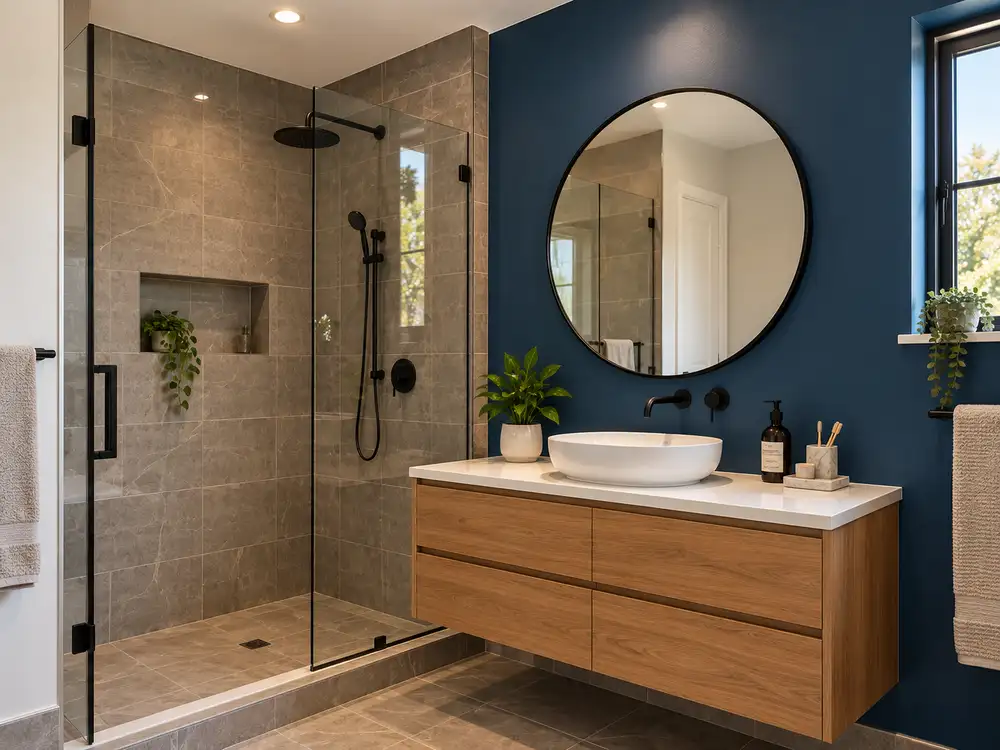
Wet areas need a finish that stands up to moisture and regular cleaning. Semi-gloss and gloss cope well with damp, and a washable low sheen can also suit bathrooms and laundries, depending on how well the room is ventilated. Good ventilation matters more than any paint, because persistent damp will beat any finish.
Ceilings
Flat is the standard. It minimises glare, hides roller marks and surface unevenness, and makes a ceiling recede rather than catch the light.
Trims, doors and cupboards
Semi-gloss or gloss is the usual choice for skirtings, architraves, doors and window frames. These surfaces get touched and scuffed, and a harder, glossier finish is easier to clean. It also gives a crisp contrast with lower-sheen walls. Because gloss highlights every flaw, the surface needs to be properly filled and sanded first.
Why preparation matters more as sheen goes up
A flat finish forgives. A semi-gloss or gloss finish doesn't. Patched holes, uneven filler, dents and roller marks show up under a glossy finish, particularly in side light from a window. That's why good painters spend so much time on filling, sanding and priming, and why a quote that includes thorough preparation can look more expensive than one that doesn't. If you're comparing prices, our guide to what interior painting costs in Wagga Wagga explains what a quote should include.
Can I mix different sheens in one room?
Yes, and most well-finished rooms do. A common combination is flat on the ceiling to reduce glare and hide imperfections, low sheen or satin on the walls for a soft, cleanable finish, and semi-gloss on the trims, doors and window frames for contrast and durability.
What about outside?
Exterior walls are usually painted in a low sheen, which suits both interior and exterior walls. Trims, doors and fascia are often finished in a higher sheen, for the same reasons as inside: they're easier to clean and handle weather and wear better. Exterior paint needs to be a product made for outdoor use, so ask your painter which range and sheen they recommend for each surface.
A simple starting point
- Ceilings: flat
- Adult bedrooms and formal living rooms: matt or low sheen
- Family rooms, living areas and most walls: low sheen
- Hallways, kids' rooms and busy areas: satin or a washable low sheen
- Kitchens and bathrooms: a hard-wearing low sheen, satin or semi-gloss, depending on use and ventilation
- Skirtings, doors, window frames and cupboards: semi-gloss or gloss
Frequently asked questions
What is the best paint sheen for walls?
For most living areas and bedrooms, low sheen is the usual choice. It hides surface flaws better than higher sheens and is still easy to wipe. Flat or matt suits low-traffic rooms and walls with imperfections, while satin or a hard-wearing low sheen suits busy areas.
Which sheen is best for kitchens and bathrooms?
Kitchens and bathrooms need a finish that stands up to cleaning and moisture. A hard-wearing, washable low sheen works for many kitchens and bathrooms, while semi-gloss or satin gives extra durability on walls that are wiped down often and on trims, doors and cupboards.
Does a higher sheen make paint last longer?
Generally, a higher sheen is tougher and easier to clean, but it only lasts well over properly prepared surfaces. Because it also shows every bump, patch and roller mark, preparation matters more as the sheen goes up.
Which sheen hides imperfections best?
The flatter the paint, the better it hides imperfections. Flat or matt finishes are the most forgiving, which is why they're the standard choice for ceilings and are useful on older walls that aren't perfectly smooth.
Can I use different sheens in the same room?
Yes, and most homes do. A common combination is flat on the ceiling, low sheen on the walls and semi-gloss on the skirtings, doors and window frames.
Does sheen change how a colour looks?
It can. Higher sheens reflect more light, so the same colour may look brighter or show more glare in a sunny room. Test a sample in your own room, in daylight and at night, before you commit.
Need help choosing the right finish?
If you're planning a repaint in Wagga Wagga or the Riverina, we're happy to talk through sheen and finish options as part of a free quote. You can read about our interior painting services, see how our painting process works, browse recent interior projects, or request a free quote.
Last updated 4 October 2026. This guide is general information. Always check the manufacturer's recommendations for the product you're using.